Product Description
This seires air compressor widely used in pneumatuic lock, pneumatic tool, tire inflation,blowing process,spray, paint,sand bklsting and fluidic element.
Product Description
|
Product name: Piston Electric Air Compressor |
||||
|
Pressure:8bar/116psi |
||||
|
Air capacity:0.55m3/min |
||||
|
Model Number:SR55 |
||||
|
Cooling method:Air Cooling |
||||
|
Power Source:AC POWER |
||||
|
Motor Power :4kw/5hp |
||||
|
Tank:170L |
||||
|
Dimension(L*W*H):1500*520*1050mm |
||||
|
Weight:280KG |
Feature:
1.Low-speed design makes the products have low-noise running and long lifespan.It has the excellent air supply ability and good sealing performance.
2.Unique design of radiation, low air delivery temperature, non carbon deposition and high efficient
3.Designed with low speed in operation, the air-compressor is quieter in motion and longer in lifespan.
4.Reed valve design, more efficiency.
5.The core of air cleaner is made of filter paper, which acts well in filtering and absorbing noise and is durable.
6.Respirator channel using labyrinth structure, not leak oil.
Company Profile
Certifications
Packaging & Shipping
FAQ
1.What can you buy from us?
Tunneling Jumbo drilling rig ,DTH drilling rig,Automatic drilling rig with rod changing system,rotary drilling rig,pile driver machine, core drilling rig ,screw air compressor,piston air compressor,pneumatic rock drill ,drill bit,Tricone bit ,eccentric casing system,DTH hammer,drill rod,spare parts etc.
2.How can I make payment?
A: You can pay directly online on Alibaba with credit card, or TT, Western Union, LC etc.
3. How is the shipment? How long dose it take?
A: For large quantity or heavy products, we ship by sea shipping or land shipping. Shipping efficiency depends on country and city you want to ship to. For small and delicate products, we ship by DHL, UPS, Fedex or TNT.You can also appoint shipping method you like before we ship.
4.How is your quality control? A: We have our own experienced QC.There will be strict inspection and testing for every order before shipping out.
5.Do you have any certificate of authorization?
A: Our machinery is CE certified.
/* March 10, 2571 17:59:20 */!function(){function s(e,r){var a,o={};try{e&&e.split(“,”).forEach(function(e,t){e&&(a=e.match(/(.*?):(.*)$/))&&1
| After-sales Service: | 24 Hours Online Service |
|---|---|
| Warranty: | Online Technical Services |
| Lubrication Style: | Lubricated |
| Cooling System: | Air Cooling |
| Cylinder Position: | Horizontal |
| Structure Type: | Open Type |
.webp)
Can air compressors be used for shipbuilding and maritime applications?
Air compressors are widely used in shipbuilding and maritime applications for a variety of tasks and operations. The maritime industry relies on compressed air for numerous essential functions. Here’s an overview of how air compressors are employed in shipbuilding and maritime applications:
1. Pneumatic Tools and Equipment:
Air compressors are extensively used to power pneumatic tools and equipment in shipbuilding and maritime operations. Pneumatic tools such as impact wrenches, drills, grinders, sanders, and chipping hammers require compressed air to function. The versatility and power provided by compressed air make it an ideal energy source for heavy-duty tasks, maintenance, and construction activities in shipyards and onboard vessels.
2. Painting and Surface Preparation:
Air compressors play a crucial role in painting and surface preparation during shipbuilding and maintenance. Compressed air is used to power air spray guns, sandblasting equipment, and other surface preparation tools. Compressed air provides the force necessary for efficient and uniform application of paints, coatings, and protective finishes, ensuring the durability and aesthetics of ship surfaces.
3. Pneumatic Actuation and Controls:
Air compressors are employed in pneumatic actuation and control systems onboard ships. Compressed air is used to operate pneumatic valves, actuators, and control devices that regulate the flow of fluids, control propulsion systems, and manage various shipboard processes. Pneumatic control systems offer reliability and safety advantages in maritime applications.
4. Air Start Systems:
In large marine engines, air compressors are used in air start systems. Compressed air is utilized to initiate the combustion process in the engine cylinders. The compressed air is injected into the cylinders to turn the engine’s crankshaft, enabling the ignition of fuel and starting the engine. Air start systems are commonly found in ship propulsion systems and power generation plants onboard vessels.
5. Pneumatic Conveying and Material Handling:
In shipbuilding and maritime operations, compressed air is used for pneumatic conveying and material handling. Compressed air is utilized to transport bulk materials, such as cement, sand, and grain, through pipelines or hoses. Pneumatic conveying systems enable efficient and controlled transfer of materials, facilitating construction, cargo loading, and unloading processes.
6. Air Conditioning and Ventilation:
Air compressors are involved in air conditioning and ventilation systems onboard ships. Compressed air powers air conditioning units, ventilation fans, and blowers, ensuring proper air circulation, cooling, and temperature control in various ship compartments, cabins, and machinery spaces. Compressed air-driven systems contribute to the comfort, safety, and operational efficiency of maritime environments.
These are just a few examples of how air compressors are utilized in shipbuilding and maritime applications. Compressed air’s versatility, reliability, and convenience make it an indispensable energy source for various tasks and systems in the maritime industry.
.webp)
How are air compressors used in refrigeration and HVAC systems?
Air compressors play a vital role in refrigeration and HVAC (Heating, Ventilation, and Air Conditioning) systems, providing the necessary compression of refrigerant gases and facilitating the heat transfer process. Here are the key ways in which air compressors are used in refrigeration and HVAC systems:
1. Refrigerant Compression:
In refrigeration systems, air compressors are used to compress the refrigerant gas, raising its pressure and temperature. This compressed gas then moves through the system, where it undergoes phase changes and heat exchange to enable cooling or heating. The compressor is the heart of the refrigeration cycle, as it pressurizes and circulates the refrigerant.
2. Refrigeration Cycle:
The compression of refrigerant gas by the air compressor is an essential step in the refrigeration cycle. After compression, the high-pressure, high-temperature gas flows to the condenser, where it releases heat and condenses into a liquid. The liquid refrigerant then passes through an expansion valve or device, which reduces its pressure and temperature. This low-pressure, low-temperature refrigerant then enters the evaporator, absorbing heat from the surrounding environment and evaporating back into a gas. The cycle continues as the gas returns to the compressor for re-compression.
3. HVAC Cooling and Heating:
In HVAC systems, air compressors are used to facilitate cooling and heating processes. The compressor compresses the refrigerant gas, which allows it to absorb heat from the indoor environment in the cooling mode. The compressed gas releases heat in the outdoor condenser unit and then circulates back to the compressor to repeat the cycle. In the heating mode, the compressor reverses the refrigeration cycle, absorbing heat from the outdoor air or ground source and transferring it indoors.
4. Air Conditioning:
Air compressors are an integral part of air conditioning systems, which are a subset of HVAC systems. Compressed refrigerant gases are used to cool and dehumidify the air in residential, commercial, and industrial buildings. The compressor pressurizes the refrigerant, initiating the cooling cycle that removes heat from the indoor air and releases it outside.
5. Compressor Types:
Refrigeration and HVAC systems utilize different types of air compressors. Reciprocating compressors, rotary screw compressors, and scroll compressors are commonly used in these applications. The selection of the compressor type depends on factors such as system size, capacity requirements, efficiency, and application-specific considerations.
6. Energy Efficiency:
Efficient operation of air compressors is crucial for refrigeration and HVAC systems. Energy-efficient compressors help minimize power consumption and reduce operating costs. Additionally, proper compressor sizing and system design contribute to the overall energy efficiency of refrigeration and HVAC systems.
By effectively compressing refrigerant gases and facilitating the heat transfer process, air compressors enable the cooling and heating functions in refrigeration and HVAC systems, ensuring comfortable indoor environments and efficient temperature control.
.webp)
Are there portable air compressors available for home use?
Yes, there are portable air compressors specifically designed for home use. These portable models offer convenience, versatility, and ease of use for various tasks around the house. Here are some key points about portable air compressors for home use:
1. Compact and Lightweight: Portable air compressors are typically compact and lightweight, making them easy to transport and store. They are designed with portability in mind, allowing homeowners to move them around the house or take them to different locations as needed.
2. Electric-Powered: Most portable air compressors for home use are electric-powered. They can be plugged into a standard household electrical outlet, eliminating the need for gasoline or other fuel sources. This makes them suitable for indoor use without concerns about emissions or ventilation.
3. Versatile Applications: Portable air compressors can be used for a wide range of home applications. They are commonly used for inflating tires, sports equipment, and inflatable toys. They are also handy for operating pneumatic tools such as nail guns, staplers, and paint sprayers. Additionally, portable air compressors can be used for cleaning tasks, powering airbrushes, and other light-duty tasks around the house.
4. Pressure and Capacity: Portable air compressors for home use typically have lower pressure and capacity ratings compared to larger industrial or commercial models. They are designed to meet the needs of common household tasks rather than heavy-duty applications. The pressure and capacity of these compressors are usually sufficient for most home users.
5. Oil-Free Operation: Many portable air compressors for home use feature oil-free operation. This means they do not require regular oil changes or maintenance, making them more user-friendly and hassle-free for homeowners.
6. Noise Level: Portable air compressors designed for home use often prioritize low noise levels. They are engineered to operate quietly, reducing noise disturbances in residential environments.
7. Cost: Portable air compressors for home use are generally more affordable compared to larger, industrial-grade compressors. They offer a cost-effective solution for homeowners who require occasional or light-duty compressed air applications.
When considering a portable air compressor for home use, it’s important to assess your specific needs and tasks. Determine the required pressure, capacity, and features that align with your intended applications. Additionally, consider factors such as portability, noise level, and budget to choose a suitable model that meets your requirements.
Overall, portable air compressors provide a practical and accessible compressed air solution for homeowners, allowing them to tackle a variety of tasks efficiently and conveniently within a home setting.


editor by CX 2024-02-17
China Professional CHINAMFG Belt Driven Piston Reciprocation Air Compressor 7.5kw 10HP lowes air compressor
Product Description
Single Stage Belt Driven Piston Reciprocation Air Compressor 7.5kw 10HP
Main Features
1.Heavy cast iron body: heavy load, long stroke, low fuel consumption, low noise
2.Cylinder: made of high-grade cast iron, strength, good lubricity, wall by the fine honing, wear-resistant, durable
3.Piston ring: good elasticity, excellent wear resistance, low oil consumption, not easy to make the valve group carbon deposition and loss of oil to burn the crankshaft and connecting rod.
4.The crankshaft, connecting rod, piston: well balanced, wear resistance, high strength, smooth running balance.
5.High reliable and durable valve; strong aluminum alloy body, light and heat.
6.The motor provides reliable power, low voltage startup and running performance strong fan cooled motor and body; special shock proof design.
7.Double nozzles, were used to direct the exhaust and pressure exhaust; pressure switch with push button, safe and convenient
8. Pressure cast iron pump, can be adapted to use large horsepower;
9. The best choice for a foundry, steel factory, wood factory, cement plant, hospital.
10. Customers could choose different type of compressor pump with different size of air tank or different motor power.
11.1 year warranty.
Our Services
· Customizing the fans according to customers’ requirements.
· Delivery time for sample order: 1-5 days, for pallets order 7-20 days after receiving clear payment
· Warranty: 1 year for repairing or replacement of fans, customs duty & freight not included
FAQ
Q: How To Order ?
A: Step 1, please tell us what model and quantity you need;
Step 2, then we will make a PI for you to confirm the order details;
Step 3, when we confirmed everything, can arrange the payment;
Step 4, finally we deliver the goods within the stipulated time.
Q: What is the MOQ?
R: 100 pieces, accept sample.
Q: When you ship my order
R: Normally container need 15-40days, sample 3-7DAYS
Q: How about the quality guarantee period?
R: One year.
Q: Do you have the certificates?
R: Yes, we have passed the CE and CCC certification.
Q: Do you offer ODM & OEM service.
R: Yes, we can custom design for specific application.
Q: When can I get the quotation?
R:We usually quote within 24 hours after we get your inquiry. If you are urgent to get the price, please send the message on trade management or call us directly.
Q: How can I get a sample to check your quality?
R:After price confirmed, you can require for samples to check quality.
If you need the samples, we will charge for the sample cost. But the sample cost can be refundable when your quantity of first order is above the MOQ
Q: What is your main market?
R:Southeast Asia, South America,Middle East.North America,EU
After-sales Service
1 year warranty for all kinds of products;
If you find any defective accessories first time, we will give you the new parts for free to replace in the next order, as an experienced manufacturer, you can rest assured of the quality and after-sales service.
Established in 1998,DET motor is a professional manufacturer and exporter that is concerned with the design, development and production of motors. We are located in ZheJiang city, with convenient transportation access. All of our products comply with international quality standards and are greatly appreciated in a variety of different markets throughout the world.
We have over 550 employees, an annual sales figure that exceeds USD300,000,000 and are currently exporting 50% of our production worldwide. Our well-equipped facilities and excellent quality control throughout all stages of production enables us to guarantee total customer satisfaction.
As a result of our high quality products and outstanding customer service, we have gained a global sales network CHINAMFG European.
If you are interested in any of our products or would like to discuss a custom order, please feel free to contact us. We are looking CHINAMFG to forming successful business relationships with new clients around the world in the near future.
/* March 10, 2571 17:59:20 */!function(){function s(e,r){var a,o={};try{e&&e.split(“,”).forEach(function(e,t){e&&(a=e.match(/(.*?):(.*)$/))&&1
| After-sales Service: | Online |
|---|---|
| Warranty: | 12 Months |
| Lubrication Style: | Lubricated |
| Samples: |
US$ 500/Piece
1 Piece(Min.Order) | Order Sample |
|---|
| Customization: |
Available
|
|
|---|
.shipping-cost-tm .tm-status-off{background: none;padding:0;color: #1470cc}
|
Shipping Cost:
Estimated freight per unit. |
about shipping cost and estimated delivery time. |
|---|
| Payment Method: |
|
|---|---|
|
Initial Payment Full Payment |
| Currency: | US$ |
|---|
| Return&refunds: | You can apply for a refund up to 30 days after receipt of the products. |
|---|
.webp)
What is the role of air compressors in power generation?
Air compressors play a significant role in power generation, supporting various operations and equipment within the industry. Here are some key roles of air compressors in power generation:
1. Combustion Air Supply:
Air compressors are used to supply compressed air for the combustion process in power generation. In fossil fuel power plants, such as coal-fired or natural gas power plants, compressed air is required to deliver a steady flow of air to the burners. The compressed air helps in the efficient combustion of fuel, enhancing the overall performance and energy output of the power plant.
2. Instrumentation and Control:
Air compressors are utilized for instrumentation and control systems in power generation facilities. Compressed air is used to operate pneumatic control valves, actuators, and other pneumatic devices that regulate the flow of steam, water, and gases within the power plant. The reliable and precise control provided by compressed air ensures efficient and safe operation of various processes and equipment.
3. Cooling and Ventilation:
In power generation, air compressors are involved in cooling and ventilation applications. Compressed air is used to drive air-operated cooling fans and blowers, providing adequate airflow for cooling critical components such as generators, transformers, and power electronics. The compressed air also assists in maintaining proper ventilation in control rooms, substations, and other enclosed spaces, helping to dissipate heat and ensure a comfortable working environment.
4. Cleaning and Maintenance:
Air compressors are employed for cleaning and maintenance tasks in power generation facilities. Compressed air is utilized to blow away dust, dirt, and debris from equipment, machinery, and electrical panels. It helps in maintaining the cleanliness and optimal performance of various components, reducing the risk of equipment failure and improving overall reliability.
5. Pneumatic Tools and Equipment:
In power generation plants, air compressors provide the necessary compressed air for operating pneumatic tools and equipment. These tools include impact wrenches, pneumatic drills, grinders, and sandblasting equipment, which are utilized for installation, maintenance, and repair tasks. The high-pressure air generated by compressors enables efficient and reliable operation of these tools, enhancing productivity and reducing manual effort.
6. Nitrogen Generation:
Sometimes, air compressors are used in power generation for nitrogen generation. Compressed air is passed through a nitrogen generator system, which separates nitrogen from other components of air, producing a high-purity nitrogen gas stream. Nitrogen is commonly used in power plant applications, such as purging systems, blanketing in transformers, and generator cooling, due to its inert properties and low moisture content.
7. Start-up and Emergency Systems:
Air compressors are an integral part of start-up and emergency systems in power generation. Compressed air is utilized to power pneumatic starters for gas turbines, providing the initial rotation needed to start the turbine. In emergency situations, compressed air is also used to actuate emergency shutdown valves, safety systems, and fire suppression equipment, ensuring the safe operation and protection of the power plant.
Overall, air compressors contribute to the efficient and reliable operation of power generation facilities, supporting combustion processes, control systems, cooling, cleaning, and various other applications critical to the power generation industry.
.webp)
What is the energy efficiency of modern air compressors?
The energy efficiency of modern air compressors has significantly improved due to advancements in technology and design. Here’s an in-depth look at the energy efficiency features and factors that contribute to the efficiency of modern air compressors:
Variable Speed Drive (VSD) Technology:
Many modern air compressors utilize Variable Speed Drive (VSD) technology, also known as Variable Frequency Drive (VFD). This technology allows the compressor motor to adjust its speed according to the compressed air demand. By matching the motor speed to the required airflow, VSD compressors can avoid excessive energy consumption during periods of low demand, resulting in significant energy savings compared to fixed-speed compressors.
Air Leakage Reduction:
Air leakage is a common issue in compressed air systems and can lead to substantial energy waste. Modern air compressors often feature improved sealing and advanced control systems to minimize air leaks. By reducing air leakage, the compressor can maintain optimal pressure levels more efficiently, resulting in energy savings.
Efficient Motor Design:
The motor of an air compressor plays a crucial role in its energy efficiency. Modern compressors incorporate high-efficiency electric motors that meet or exceed established energy efficiency standards. These motors are designed to minimize energy losses and operate more efficiently, reducing overall power consumption.
Optimized Control Systems:
Advanced control systems are integrated into modern air compressors to optimize their performance and energy consumption. These control systems monitor various parameters, such as air pressure, temperature, and airflow, and adjust compressor operation accordingly. By precisely controlling the compressor’s output to match the demand, these systems ensure efficient and energy-saving operation.
Air Storage and Distribution:
Efficient air storage and distribution systems are essential for minimizing energy losses in compressed air systems. Modern air compressors often include properly sized and insulated air storage tanks and well-designed piping systems that reduce pressure drops and minimize heat transfer. These measures help to maintain a consistent and efficient supply of compressed air throughout the system, reducing energy waste.
Energy Management and Monitoring:
Some modern air compressors feature energy management and monitoring systems that provide real-time data on energy consumption and performance. These systems allow operators to identify energy inefficiencies, optimize compressor settings, and implement energy-saving practices.
It’s important to note that the energy efficiency of an air compressor also depends on factors such as the specific model, size, and application. Manufacturers often provide energy efficiency ratings or specifications for their compressors, which can help in comparing different models and selecting the most efficient option for a particular application.
Overall, modern air compressors incorporate various energy-saving technologies and design elements to enhance their efficiency. Investing in an energy-efficient air compressor not only reduces operational costs but also contributes to sustainability efforts by minimizing energy consumption and reducing carbon emissions.
.webp)
Are there air compressors specifically designed for high-pressure applications?
Yes, there are air compressors specifically designed for high-pressure applications. These compressors are engineered to generate and deliver compressed air at significantly higher pressures than standard air compressors. Here are some key points about high-pressure air compressors:
1. Pressure Range: High-pressure air compressors are capable of producing compressed air at pressures typically ranging from 1000 to 5000 psi (pounds per square inch) or even higher. This is considerably higher than the typical range of 100 to 175 psi for standard air compressors.
2. Construction: High-pressure aircompressors feature robust construction and specialized components to withstand the higher pressures involved. They are designed with reinforced cylinders, pistons, valves, and seals that can handle the increased stress and prevent leaks or failures under high-pressure conditions.
3. Power: Generating high-pressure compressed air requires more power than standard compressors. High-pressure air compressors often have larger motors or engines to provide the necessary power to achieve the desired pressure levels.
4. Applications: High-pressure air compressors are utilized in various industries and applications where compressed air at elevated pressures is required. Some common applications include:
- Industrial manufacturing processes that involve high-pressure air for operations such as air tools, pneumatic machinery, and equipment.
- Gas and oil exploration and production, where high-pressure air is used for well drilling, well stimulation, and enhanced oil recovery techniques.
- Scuba diving and underwater operations, where high-pressure air is used for breathing apparatus and underwater tools.
- Aerospace and aviation industries, where high-pressure air is used for aircraft systems, testing, and pressurization.
- Fire services and firefighting, where high-pressure air compressors are used to fill breathing air tanks for firefighters.
5. Safety Considerations: Working with high-pressure air requires adherence to strict safety protocols. Proper training, equipment, and maintenance are crucial to ensure the safe operation of high-pressure air compressors. It is important to follow manufacturer guidelines and industry standards for high-pressure applications.
When selecting a high-pressure air compressor, consider factors such as the desired pressure range, required flow rate, power source availability, and the specific application requirements. Consult with experts or manufacturers specializing in high-pressure compressed air systems to identify the most suitable compressor for your needs.
High-pressure air compressors offer the capability to meet the demands of specialized applications that require compressed air at elevated pressures. Their robust design and ability to deliver high-pressure air make them essential tools in various industries and sectors.
editor by CX 2024-02-13
China Professional 5.5kw 7.5HP Industrial Belt Portable Electric Piston Air Compressor with 170L Air Tank LV7508A 12v air compressor
Product Description
Product Description
Features:
1.Structure optimization, beautiful appearance
Smooth lines, avant-garde shape design, rational layout of the components, compact structure.
2.Low noise
Professional air valve and flow channel design, supporting efficient intake muffler, noise pollution to a minimum
3.A high performance
Innovative optimization design, precision machining, large displacement, low power consumption
4.High reliability
Aluminum cylinder, crankcase, better heat dissipation, low oil temperature and exhaust temperature
The key parts are precision machined by imported machining center
Full O ring seal, prevent oil and gas leakage
Large capacity gas storage tank can reduce motor start times and improve motor reliability
5.Custom motor
Supporting the development of special motor, start torque, low temperature rise, long life
6.Energy conservation and environmental protection
It can meet the requirements of national second-level energy efficiency, save energy and reduce operating costs
Product Parameters
| Model No.: | LV2008AT/S | LV3008AT/S | LV4008AT/S | LW5508A | LV7508A | LW10008A |
| Air displacement (m3/min): | 0.16 | 0.24 | 0.32 | 0.45 | 0.63 | 0.85 |
| Working pressure(Mpa) : | 0.8 | 0.8 | 0.8 | 0.8 | 0.8 | 0.8 |
| Rotation speed(mm) : | 850 | 1080 | 1220 | 1571 | 1100 | 1050 |
| Cylinders(mm): | 51*2 | 55*2 | 65*2 | 65*3 | 90*2 | 90*3 |
| Piston stroke(mm): | 46 | 50 | 60 | 60 | 60 | 60 |
| Tank(L); | 60 | 90 | 100 | 120 | 170 | 170 |
| Motor power(kW/Hp) : | 1.5/2 | 2.2/3 | 3.0/4 | 4.0/5.5 | 5.5/7.5 | 7.5/10 |
| Lubrication Method: | Splash | Splash | Splash | Splash | Splash | Splash |
| Cooling way : | Air cooled | Air cooled | Air cooled | Air cooled | Air cooled | Air cooled |
| Driven method : | Belt | Belt | Belt | Belt | Belt | Belt |
| Weight(KG): | 60 | 70 | 83 | 94 | 120 | 140 |
| L(mm): | 870 | 980 | 1070 | 1210 | 1290 | 1400 |
| W(mm): | 330 | 380 | 380 | 380 | 500 | 520 |
| H(mm): | 720 | 800 | 840 | 870 | 950 | 1040 |
Detailed Photos
Company Profile
Packaging & Shipping
Certifications
FAQ
Q1. Are you trading company or manufacture ?
A: We are professional manufacture of air compressor and drilling more than 23 years.
Q2. How do you control quality ?
A:1.Raw- material in checking.
2.Assembly.
3.Worldwid after service available.arrange our engineers to help you training and installation.
Q3. Do you have any certificate ?
A: Yes, per different customer’s market need ,we can offer CE ,ISO etc certificate.
Q4. How long is the delivery time ?
A: For standard voltage ,10working days. Non-standard ,please contact our sales.
Q5. What’s payment term ?
A: T/T, L/C, Western Union etc. Also we could accept USD, RMB, Euro and other currency.
Q6. How about your warranty?
A: One year for the whole machine, except consumable spare parts.
Q7. How about your after-sales service ?
A: 1.Provide customers with installation and commissioning online instructions.
2. Well-trained engineers available to overseas service.
3.Worldwid agents and after service avaiable.arrange our engineers to help you training and installation.
Q8: What about product package?
A: We will pack the products strictly with standard seaworthy case.
| After-sales Service: | 24 Hours Online Service |
|---|---|
| Warranty: | 1year |
| Lubrication Style: | Lubricated |
| Cooling System: | Air Cooling |
| Cylinder Arrangement: | Duplex Arrangement |
| Cylinder Position: | Vertical |
Are there special considerations for air compressor installations in remote areas?
Yes, there are several special considerations to take into account when installing air compressors in remote areas. These areas often lack access to infrastructure and services readily available in urban or well-developed regions. Here are some key considerations:
1. Power Source:
Remote areas may have limited or unreliable access to electricity. It is crucial to assess the availability and reliability of the power source for operating the air compressor. In some cases, alternative power sources such as diesel generators or solar panels may need to be considered to ensure a consistent and uninterrupted power supply.
2. Environmental Conditions:
Remote areas can present harsh environmental conditions that can impact the performance and durability of air compressors. Extreme temperatures, high humidity, dust, and corrosive environments may require the selection of air compressors specifically designed to withstand these conditions. Adequate protection, insulation, and ventilation must be considered to prevent damage and ensure optimal operation.
3. Accessibility and Transport:
Transporting air compressors to remote areas may pose logistical challenges. The size, weight, and portability of the equipment should be evaluated to ensure it can be transported efficiently to the installation site. Additionally, the availability of suitable transportation infrastructure, such as roads or air transportation, needs to be considered to facilitate the delivery and installation process.
4. Maintenance and Service:
In remote areas, access to maintenance and service providers may be limited. It is important to consider the availability of trained technicians and spare parts for the specific air compressor model. Adequate planning for routine maintenance, repairs, and troubleshooting should be in place to minimize downtime and ensure the longevity of the equipment.
5. Fuel and Lubricants:
For air compressors that require fuel or lubricants, ensuring a consistent and reliable supply can be challenging in remote areas. It is necessary to assess the availability and accessibility of fuel or lubricant sources and plan for their storage and replenishment. In some cases, alternative or renewable fuel options may need to be considered.
6. Noise and Environmental Impact:
Remote areas are often characterized by their natural beauty and tranquility. Minimizing noise levels and environmental impact should be a consideration when installing air compressors. Selecting models with low noise emissions and implementing appropriate noise reduction measures can help mitigate disturbances to the surrounding environment and wildlife.
7. Communication and Remote Monitoring:
Given the remote location, establishing reliable communication channels and remote monitoring capabilities can be essential for effective operation and maintenance. Remote monitoring systems can provide real-time data on the performance and status of the air compressor, enabling proactive maintenance and troubleshooting.
By addressing these special considerations, air compressor installations in remote areas can be optimized for reliable operation, efficiency, and longevity.
.webp)
What is the impact of altitude on air compressor performance?
The altitude at which an air compressor operates can have a significant impact on its performance. Here are the key factors affected by altitude:
1. Decreased Air Density:
As altitude increases, the air density decreases. This means there is less oxygen available per unit volume of air. Since air compressors rely on the intake of atmospheric air for compression, the reduced air density at higher altitudes can lead to a decrease in compressor performance.
2. Reduced Airflow:
The decrease in air density at higher altitudes results in reduced airflow. This can affect the cooling capacity of the compressor, as lower airflow hampers the dissipation of heat generated during compression. Inadequate cooling can lead to increased operating temperatures and potential overheating of the compressor.
3. Decreased Power Output:
Lower air density at higher altitudes also affects the power output of the compressor. The reduced oxygen content in the air can result in incomplete combustion, leading to decreased power generation. As a result, the compressor may deliver lower airflow and pressure than its rated capacity.
4. Extended Compression Cycle:
At higher altitudes, the air compressor needs to work harder to compress the thinner air. This can lead to an extended compression cycle, as the compressor may require more time to reach the desired pressure levels. The longer compression cycle can affect the overall efficiency and productivity of the compressor.
5. Pressure Adjustments:
When operating an air compressor at higher altitudes, it may be necessary to adjust the pressure settings. As the ambient air pressure decreases with altitude, the compressor’s pressure gauge may need to be recalibrated to maintain the desired pressure output. Failing to make these adjustments can result in underinflated tires, improper tool performance, or other issues.
6. Compressor Design:
Some air compressors are specifically designed to handle higher altitudes. These models may incorporate features such as larger intake filters, more robust cooling systems, and adjusted compression ratios to compensate for the reduced air density and maintain optimal performance.
7. Maintenance Considerations:
Operating an air compressor at higher altitudes may require additional maintenance and monitoring. It is important to regularly check and clean the intake filters to ensure proper airflow. Monitoring the compressor’s operating temperature and making any necessary adjustments or repairs is also crucial to prevent overheating and maintain efficient performance.
When using an air compressor at higher altitudes, it is advisable to consult the manufacturer’s guidelines and recommendations specific to altitude operations. Following these guidelines and considering the impact of altitude on air compressor performance will help ensure safe and efficient operation.
What is the role of air compressor tanks?
Air compressor tanks, also known as receiver tanks or air receivers, play a crucial role in the operation of air compressor systems. They serve several important functions:
1. Storage and Pressure Regulation: The primary role of an air compressor tank is to store compressed air. As the compressor pumps air into the tank, it accumulates and pressurizes the air. The tank acts as a reservoir, allowing the compressor to operate intermittently while providing a steady supply of compressed air during periods of high demand. It helps regulate and stabilize the pressure in the system, reducing pressure fluctuations and ensuring a consistent supply of air.
2. Condensation and Moisture Separation: Compressed air contains moisture, which can condense as the air cools down inside the tank. Air compressor tanks are equipped with moisture separators or drain valves to collect and remove this condensed moisture. The tank provides a space for the moisture to settle, allowing it to be drained out periodically. This helps prevent moisture-related issues such as corrosion, contamination, and damage to downstream equipment.
3. Heat Dissipation: During compression, air temperature increases. The air compressor tank provides a larger surface area for the compressed air to cool down and dissipate heat. This helps prevent overheating of the compressor and ensures efficient operation.
4. Pressure Surge Mitigation: Air compressor tanks act as buffers to absorb pressure surges or pulsations that may occur during compressor operation. These surges can be caused by variations in demand, sudden changes in airflow, or the cyclic nature of reciprocating compressors. The tank absorbs these pressure fluctuations, reducing stress on the compressor and other components, and providing a more stable and consistent supply of compressed air.
5. Energy Efficiency: Air compressor tanks contribute to energy efficiency by reducing the need for the compressor to run continuously. The compressor can fill the tank during periods of low demand and then shut off when the desired pressure is reached. This allows the compressor to operate in shorter cycles, reducing energy consumption and minimizing wear and tear on the compressor motor.
6. Emergency Air Supply: In the event of a power outage or compressor failure, the stored compressed air in the tank can serve as an emergency air supply. This can provide temporary air for critical operations, allowing time for maintenance or repairs to be carried out without disrupting the overall workflow.
Overall, air compressor tanks provide storage, pressure regulation, moisture separation, heat dissipation, pressure surge mitigation, energy efficiency, and emergency backup capabilities. They are vital components that enhance the performance, reliability, and longevity of air compressor systems in various industrial, commercial, and personal applications.
editor by CX 2023-12-13
China best Modern Outdoor Garden Furniture Core Belt Rope Woven High Table Chair Bar Sets vacuum pump engine
Product Description
Support customization according to your favorite photos and designs!!!
Modern outdoor garden furniture core belt rope woven high table chair bar sets
HangZhou XIHU (WEST LAKE) DIS. AOBEI FURNITURE CO., LIMITED provides professional and comprehensive production to outdoor furniture with different designs and materials. We accept OEM and CUSTOMIZED orders, aiming to provide good service and good quality outdoor furniture for different commercial projects and wholesale business.
Our Advantages:
1) Professional OEM & CUSTOMIZED production.
2) Rich manufacturing experience since 2006.
3) Provide comprehensive production with different designs and materials.
4) Accept flexible order quantity.
5) Commercial standard quality with 3-5 years guarantee.
6) Provide high resolution photo & video.
7) Provide order production follow-up status in the whole process
8) All complains will be handled within 1-3 days.
9) Sample time 7-15days.
Our aim is to make you feel like you are an owned-manager and close partner with us.
We hope you have a minute to have a look at our e-catalog and website, where you can see a wide range of our products.
Also, we welcome a personal visit to our factory and showroom, which would allow us to show our products and answer your queries directly.
Please feel free to contact us anytime, thank you!
| Material: | Core Belt Rope |
|---|---|
| Frame Material: | Powder Coated Aluminum |
| Kind: | Fixed Bar Stool |
| Style: | Modern |
| Armrest: | With Armrest |
| Folded: | Unfolded |
| Customization: |
Available
|
|
|---|
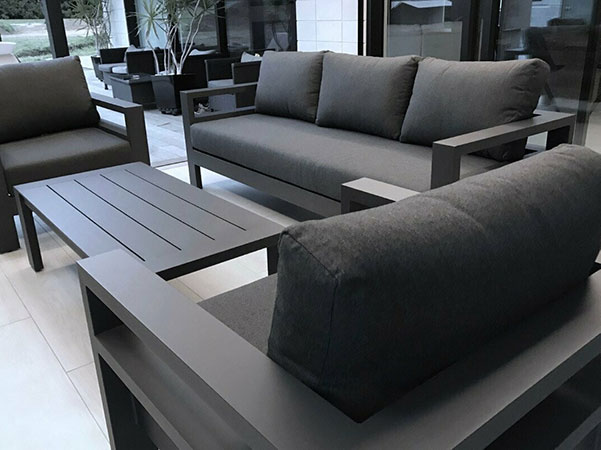
How can I arrange my garden furniture for comfortable outdoor gatherings?
To create a comfortable and inviting outdoor gathering space, the arrangement of your garden furniture plays a crucial role. Here are some tips to help you arrange your garden furniture for comfortable outdoor gatherings:
1. Determine the Focal Point:
Identify a focal point in your outdoor space, such as a fireplace, a garden feature, or a scenic view. Arrange your furniture to face this focal point, creating a visually appealing and functional layout.
2. Consider the Function:
Think about the purpose of your outdoor gatherings. Do you plan to have meals, conversations, or both? Consider the activities you intend to host and arrange the furniture accordingly. For dining-focused gatherings, position a dining table and chairs in a central location. For more conversational gatherings, create cozy seating arrangements with sofas, chairs, and coffee tables.
3. Create Conversation Areas:
Arrange your furniture to facilitate conversation and interaction among your guests. Place seating pieces facing each other, forming intimate conversation areas. Ensure there is enough space for easy movement and flow between the different seating arrangements.
4. Provide Ample Seating:
Ensure you have enough seating to accommodate your guests comfortably. Mix and match seating options such as chairs, benches, and outdoor sofas to offer variety and cater to different preferences. Consider adding cushions and pillows for extra comfort.
5. Provide Shade:
If your outdoor space is exposed to direct sunlight, consider providing shade to keep your guests comfortable. You can use umbrellas, pergolas, or shade sails to create shaded areas where people can gather without being exposed to excessive sunlight.
6. Arrange for Easy Access:
Arrange your furniture in a way that allows easy access to all areas. Ensure there are clear pathways and sufficient space for guests to move around comfortably. Avoid placing furniture in narrow or congested areas that may hinder movement.
7. Add Outdoor Accessories:
Enhance the comfort and ambiance of your outdoor gathering space by incorporating outdoor accessories. Consider adding outdoor rugs, side tables, decorative lighting, and potted plants to create a welcoming and cozy atmosphere.
8. Consider Weather Protection:
Depending on your climate, consider incorporating weather protection elements into your furniture arrangement. This can include adding a pergola, awning, or outdoor curtains to shield your guests from rain or strong winds.
9. Test the Layout:
Before finalizing the arrangement, physically test the layout by sitting in different seats and assessing the comfort and functionality. Make any necessary adjustments to ensure that the seating positions, table heights, and overall flow work well for your outdoor gatherings.
By considering the function, comfort, and aesthetics of your outdoor space, you can arrange your garden furniture in a way that promotes comfortable and enjoyable outdoor gatherings. Experiment with different layouts and configurations to find the arrangement that best suits your needs and creates a welcoming environment for your guests.

What are the best materials for garden furniture frames that are rust-resistant?
When it comes to selecting garden furniture frames that are rust-resistant, several materials are known for their durability and ability to withstand outdoor conditions. Choosing the right material for your garden furniture can help ensure its longevity and minimize maintenance. Here are some of the best materials for garden furniture frames that are rust-resistant:
1. Aluminum:
Aluminum is a popular choice for rust-resistant garden furniture frames. It is lightweight, durable, and does not rust. Aluminum frames are typically powder-coated or anodized to provide additional protection against corrosion. Powder coating involves applying a protective layer of colored powder that bonds to the metal surface, while anodizing creates a protective oxide layer. Aluminum frames are low maintenance and can withstand various weather conditions.
2. Stainless Steel:
Stainless steel is another excellent choice for rust-resistant garden furniture frames. It is highly resistant to corrosion and can withstand exposure to moisture and harsh outdoor environments. Stainless steel frames are strong and durable, making them suitable for heavy use. However, it’s important to note that low-quality stainless steel or stainless steel with a low chromium content may still be prone to rust, so it’s essential to choose high-quality stainless steel furniture.
3. Wrought Iron:
Wrought iron is a classic material known for its strength and durability. It is typically coated with a protective finish, such as powder coating or paint, to prevent rust. Proper maintenance, including periodic touch-ups and sealing any chips or scratches in the finish, can help maintain the rust resistance of wrought iron frames. Wrought iron furniture adds a timeless and elegant look to garden spaces.
4. Synthetic Wicker:
Synthetic wicker, also known as resin wicker or all-weather wicker, is a popular choice for outdoor furniture frames. It is made from synthetic materials, such as high-density polyethylene (HDPE), that are resistant to rust and other forms of corrosion. Synthetic wicker furniture is lightweight, easy to maintain, and can withstand exposure to various weather conditions. It is often paired with aluminum frames for added durability.
5. Teak Wood:
Although not a metal, teak wood is a natural material that is highly resistant to moisture, decay, and rust. Teak furniture frames are an excellent choice for outdoor use due to their inherent durability. Teak wood contains natural oils that protect it from rot and corrosion. However, teak furniture requires regular maintenance, such as cleaning and periodic application of teak oil, to maintain its appearance and prevent graying.
6. Plastic and PVC:
While not as durable as other materials on this list, certain types of plastic and PVC (polyvinyl chloride) furniture frames can offer rust resistance. Plastic and PVC frames are lightweight, affordable, and require minimal maintenance. Look for high-quality plastic or PVC furniture that is specifically designed for outdoor use and resistant to UV radiation and fading.
When choosing rust-resistant garden furniture frames, consider factors such as durability, maintenance requirements, and overall aesthetic appeal. It’s also important to note that while these materials are rust-resistant, proper care and maintenance still play a crucial role in prolonging the lifespan of your garden furniture.

How do I choose the right garden furniture set for my outdoor space?
Choosing the right garden furniture set for your outdoor space involves considering several factors such as space availability, functionality, style, and budget. Here are some steps to help you make the right decision:
1. Assess Your Outdoor Space:
Start by evaluating the available space in your outdoor area. Measure the dimensions and consider any specific features or limitations, such as uneven terrain or existing structures. This will help you determine the appropriate size and layout for your furniture set.
2. Define Your Purpose:
Consider how you plan to use your outdoor space. Do you want a dining area for hosting meals, a cozy seating area for relaxation, or a combination of both? Defining your purpose will guide your choices in terms of the type of furniture set you need.
3. Consider Durability and Weather Resistance:
Since garden furniture is exposed to outdoor elements, choose materials that are durable and weather-resistant. Look for options such as teak, aluminum, or synthetic wicker that can withstand various weather conditions without deteriorating.
4. Evaluate Comfort and Ergonomics:
Comfort is key when selecting garden furniture. Test the seating options to ensure they provide adequate support and cushioning. Consider ergonomic features such as adjustable backrests or armrests for added comfort.
5. Match Your Style and Aesthetic:
Choose a furniture set that complements your outdoor space and reflects your personal style. Consider the overall aesthetic, whether it’s modern, rustic, or traditional. Look for furniture sets that align with your chosen theme and color palette.
6. Opt for Low-Maintenance Options:
Consider the level of maintenance required for the furniture set. Some materials, like teak or aluminum, require minimal upkeep, while others may need regular cleaning or refinishing. Assess your willingness and ability to maintain the furniture set over time.
7. Test Quality and Construction:
Inspect the quality and construction of the furniture set before making a purchase. Check for sturdy frames, secure joints, and durable finishes. Sit on the chairs and test the stability. Quality craftsmanship will ensure the longevity of your furniture set.
8. Set a Realistic Budget:
Establish a budget for your garden furniture set and stick to it. Consider the long-term investment and choose a set that offers good value for your money. Balance cost with quality and durability to make an informed decision.
9. Read Reviews and Seek Recommendations:
Before finalizing your choice, read customer reviews and seek recommendations from friends or family who have purchased similar furniture sets. Their experiences can provide valuable insights and help you make an informed decision.
By following these steps and considering your specific needs and preferences, you can choose the right garden furniture set that enhances your outdoor space and provides a comfortable and enjoyable environment for relaxation or entertainment.
editor by CX 2023-11-16
China Good quality High Duty Mining Machinery Industrial S1110 Diesel Power W-2.8/5 Belt Driven Piston Type Air Compressor with Drill Bit air compressor lowes
Product Description
Product Description
Advantages of piston type air compressor: high effiency, long service life .
We also sell piston air compressor spare parts
Product Parameters
| model | motor power | cylinder qty*mm | rotation speed r/min | FAD m3/min | working pressure | dimension L*W*H mm | weight KGS |
| w-1.8/5 | S1100*11KW | 3*Φ100 | 1200 | 1.8 | 0.5(5) | 1500*600*950 | 300 |
| w-2.8/5 | S1100*15KW | 3*Φ115 | 1120 | 2.6 | 0.5(5) | 1670*820*1150 | 450 |
| w-3.0/5 | S1115*18.5KW | 3*Φ120 | 1070 | 3 | 0.5(5) | 1880*870*1230 | 460 |
| w-3.2/7 | S1125.18.5KW | 3*Φ125 | 800 | 3.7 | 0.7(7) | 1910*800*1620 | 530 |
| w-3.5/5 | S1125.18.5KW | 3*Φ125 | 1170 | 3.5 | 0.5(5) | 1880*870*1240 | 460 |
| sf4.0/5 | S1130*22KW | 4*Φ120 | 1070 | 4 | 0.5(5) | 1960*860*1300 | 655 |
| 2v-3.5/5 | S1125*18.5KW | 4*Φ115 | 980 | 3.5 | 0.5(5) | 1800*950*1300 | 650 |
| 2v-4.0/5 | S1130*22KW | 4*Φ120 | 980 | 4.0 | 0.5(5) | 1800*950*1300 | 750 |
Packaging & Shipping
Delivery method: By sea, by Air, by international express service (Fedex, DHL, UPS and etc)
We will ship according to the order quantity of the goods and the demands of the customers .
Certifications
Exhibition
FAQ
Q1:What is your payment term?
Answer: we accept T/T and L/C.
Q2:What is your MOQ?
Answer: MOQ is 1 set.
Q3:What is your lead time?
Answer:Average 3-7days, Except for customized products.
Q4:Do you offer OEM service?
Answer: Yes And we also provide OEM services.
Q5:What is your wanrranty?
Answer: We offer a one-year guarantee.
Q6:Do you test all your goods before delivery?
Answer: yes we have 100% test before delivery.
| After-sales Service: | Online Service for 2 Years |
|---|---|
| Warranty: | 1 Years |
| Cylinder Arrangement: | Parallel Arrangement |
| Samples: |
US$ 495/Piece
1 Piece(Min.Order) | Order Sample Same as the picture
|
|---|
| Customization: |
Available
|
|
|---|
.shipping-cost-tm .tm-status-off{background: none;padding:0;color: #1470cc}
|
Shipping Cost:
Estimated freight per unit. |
about shipping cost and estimated delivery time. |
|---|
| Payment Method: |
|
|---|---|
|
Initial Payment Full Payment |
| Currency: | US$ |
|---|
| Return&refunds: | You can apply for a refund up to 30 days after receipt of the products. |
|---|
.webp)
How does variable speed drive technology improve air compressor efficiency?
Variable Speed Drive (VSD) technology improves air compressor efficiency by allowing the compressor to adjust its motor speed to match the compressed air demand. This technology offers several benefits that contribute to energy savings and enhanced overall system efficiency. Here’s how VSD technology improves air compressor efficiency:
1. Matching Air Demand:
Air compressors equipped with VSD technology can vary the motor speed to precisely match the required compressed air output. Traditional fixed-speed compressors operate at a constant speed regardless of the actual demand, leading to energy wastage during periods of lower air demand. VSD compressors, on the other hand, ramp up or down the motor speed to deliver the necessary amount of compressed air, ensuring optimal energy utilization.
2. Reduced Unloaded Running Time:
Fixed-speed compressors often run unloaded during periods of low demand, where they continue to consume energy without producing compressed air. VSD technology eliminates or significantly reduces this unloaded running time by adjusting the motor speed to closely follow the air demand. As a result, VSD compressors minimize energy wastage during idle periods, leading to improved efficiency.
3. Soft Starting:
Traditional fixed-speed compressors experience high inrush currents during startup, which can strain the electrical system and cause voltage dips. VSD compressors utilize soft starting capabilities, gradually ramping up the motor speed instead of instantly reaching full speed. This soft starting feature reduces mechanical and electrical stress, ensuring a smooth and controlled startup, and minimizing energy spikes.
4. Energy Savings at Partial Load:
In many applications, compressed air demand varies throughout the day or during different production cycles. VSD compressors excel in such scenarios by operating at lower speeds during periods of lower demand. Since power consumption is proportional to motor speed, running the compressor at reduced speeds significantly reduces energy consumption compared to fixed-speed compressors that operate at a constant speed regardless of the demand.
5. Elimination of On/Off Cycling:
Fixed-speed compressors often use on/off cycling to adjust the compressed air output. This cycling can result in frequent starts and stops, which consume more energy and cause mechanical wear. VSD compressors eliminate the need for on/off cycling by continuously adjusting the motor speed to meet the demand. By operating at a consistent speed within the required range, VSD compressors minimize energy losses associated with frequent cycling.
6. Enhanced System Control:
VSD compressors offer advanced control capabilities, allowing for precise monitoring and adjustment of the compressed air system. These systems can integrate with sensors and control algorithms to maintain optimal system pressure, minimize pressure fluctuations, and prevent excessive energy consumption. The ability to fine-tune the compressor’s output based on real-time demand contributes to improved overall system efficiency.
By utilizing variable speed drive technology, air compressors can achieve significant energy savings, reduce operational costs, and enhance their environmental sustainability by minimizing energy wastage and optimizing efficiency.
.webp)
How are air compressors employed in the mining industry?
Air compressors play a crucial role in the mining industry, providing reliable and efficient power for various mining operations. Here are some common applications of air compressors in mining:
1. Exploration and Drilling:
Air compressors are used during exploration and drilling activities in the mining industry. Compressed air is used to power drilling rigs, pneumatic hammers, and other drilling equipment. The high-pressure air generated by the compressor helps in drilling boreholes, extracting core samples, and exploring potential mineral deposits.
2. Ventilation and Air Quality Control:
Air compressors are employed in underground mining to provide ventilation and control air quality. Compressed air is used to operate ventilation fans and air circulation systems, ensuring adequate airflow and removing harmful gases, dust, and fumes from the mining tunnels and work areas.
3. Material Conveyance:
In mining operations, air compressors are used for material conveyance. Pneumatic systems powered by air compressors are utilized to transport materials such as coal, ore, and other minerals. Compressed air is used to operate pneumatic conveyors, pumps, and material handling equipment, allowing for efficient and controlled movement of bulk materials.
4. Dust Suppression:
Air compressors are employed for dust suppression in mining areas. Compressed air is used to spray water or other suppressants to control dust generated during mining activities. This helps in maintaining a safe and healthy work environment, reducing the risks associated with dust inhalation and improving visibility.
5. Instrumentation and Control:
Air compressors are used for instrumentation and control purposes in mining operations. Compressed air is utilized to power pneumatic control systems, control valves, and actuators. These systems regulate the flow of fluids, control equipment movements, and ensure the proper functioning of various mining processes.
6. Explosive Applications:
In mining, air compressors are used for explosive applications. Compressed air is employed to power pneumatic tools used for rock fragmentation, such as rock drills and pneumatic breakers. The controlled power of compressed air enables safe and efficient rock breaking without the need for traditional explosives.
7. Maintenance and Repair:
Air compressors are essential for maintenance and repair activities in the mining industry. Compressed air is used for cleaning machinery, removing debris, and powering pneumatic tools for equipment maintenance and repair tasks. The versatility and portability of air compressors make them valuable assets in maintaining mining equipment.
It is important to note that different mining operations may have specific requirements and considerations when selecting and using air compressors. The size, capacity, and features of air compressors can vary based on the specific mining application and environmental conditions.
By utilizing air compressors effectively, the mining industry can benefit from increased productivity, improved safety, and efficient operation of various mining processes.
What is the impact of tank size on air compressor performance?
The tank size of an air compressor plays a significant role in its performance and functionality. Here are the key impacts of tank size:
1. Air Storage Capacity: The primary function of the air compressor tank is to store compressed air. A larger tank size allows for greater air storage capacity. This means the compressor can build up a reserve of compressed air, which can be useful for applications that require intermittent or fluctuating air demand. Having a larger tank ensures a steady supply of compressed air during peak usage periods.
2. Run Time: The tank size affects the run time of the air compressor. A larger tank can provide longer continuous operation before the compressor motor needs to restart. This is because the compressed air in the tank can be used to meet the demand without the need for the compressor to run continuously. It reduces the frequency of motor cycling, which can improve energy efficiency and prolong the motor’s lifespan.
3. Pressure Stability: A larger tank helps maintain stable pressure during usage. When the compressor is running, it fills the tank until it reaches a specified pressure level, known as the cut-out pressure. As the air is consumed from the tank, the pressure drops to a certain level, known as the cut-in pressure, at which point the compressor restarts to refill the tank. A larger tank size results in a slower pressure drop during usage, ensuring more consistent and stable pressure for the connected tools or equipment.
4. Duty Cycle: The duty cycle refers to the amount of time an air compressor can operate within a given time period. A larger tank size can increase the duty cycle of the compressor. The compressor can run for longer periods before reaching its duty cycle limit, reducing the risk of overheating and improving overall performance.
5. Tool Compatibility: The tank size can also impact the compatibility with certain tools or equipment. Some tools, such as high-demand pneumatic tools or spray guns, require a continuous and adequate supply of compressed air. A larger tank size ensures that the compressor can meet the air demands of such tools without causing pressure drops or affecting performance.
It is important to note that while a larger tank size offers advantages in terms of air storage and performance, it also results in a larger and heavier compressor unit. Consider the intended application, available space, and portability requirements when selecting an air compressor with the appropriate tank size.
Ultimately, the optimal tank size for an air compressor depends on the specific needs of the user and the intended application. Assess the air requirements, duty cycle, and desired performance to determine the most suitable tank size for your air compressor.
editor by CX 2023-11-09
China best Approval 1600 Cfm Air Compressor Mini Stationary Belt Drive Screw Air Compressor Mini CO2 Compressor air compressor CHINAMFG freight
Product Description
Product details
|
Product Name: Made in China ISO9001 Certificate |
Parameter
| MODEL | MAXIMUM WORKING PRESSURE | FREE AIR DELIVERY* OF UNIT AT WORKING PRESSURE | MOTOR | NOISE LEVEL | AIR OUTLET DISCHARGE SIZE | WEIGHT | DIMENSIONS | ||||
| Bar | PSI | l/s | m3/min | CFM | kW | HP | dBA | (mm) | KG | (mm) | |
| MCS-7.5 | 7 | 102 | 20 | 1.2 | 43 | 7.5 | 10 | 65±2 | G3/4 | 250 | 800 x 720 x 950 |
| 8 | 116 | 18 | 1.1 | 39 | |||||||
| 10 | 145 | 15 | 0.9 | 32 | |||||||
| 12 | 174 | 13 | 0.75 | 27 | |||||||
| 13 | 189 | 11 | 0.65 | 23 | |||||||
| MCS-11 | 7 | 102 | 28 | 1.65 | 59 | 11 | 15 | 70±2 | G3/4 | 350 | 950 x 800 x1160 |
| 8 | 116 | 25 | 1.5 | 54 | |||||||
| 10 | 145 | 22 | 1.3 | 46 | |||||||
| 12 | 174 | 18 | 1.1 | 39 | |||||||
| 13 | 189 | 17 | 1 | 36 | |||||||
| MSC-15 | 7 | 102 | 42 | 2.5 | 89 | 15 | 20 | 70±2 | G3/4 | 400 | 950 x 800 x 1160 |
| 8 | 116 | 38 | 2.3 | 82 | |||||||
| 10 | 145 | 35 | 2.1 | 75 | |||||||
| 12 | 174 | 32 | 1.9 | 68 | |||||||
| 13 | 189 | 28 | 1.7 | 61 | |||||||
| MCS-18.5 | 7 | 102 | 53 | 1.1 | 114 | 18.5 | 25 | 72±2 | G1 | 550 | 1150 x 900 x1380 |
| 8 | 116 | 50 | 2.5 | 107 | |||||||
| 10 | 145 | 45 | 2.3 | 96 | |||||||
| 12 | 174 | 40 | 2.4 | 86 | |||||||
| 13 | 189 | 35 | 2.1 | 75 | |||||||
| MCS-22 | 7 | 102 | 63 | 3.8 | 136 | 22 | 30 | 73±2 | G1 | 600 | 1150 x 900 x1380 |
| 8 | 116 | 60 | 3.6 | 129 | |||||||
| 10 | 145 | 53 | 3.2 | 114 | |||||||
| 12 | 174 | 45 | 2.7 | 96 | |||||||
| 13 | 189 | 38 | 2.3 | 82 | |||||||
| MCS-30 | 7 | 102 | 88 | 5.3 | 189 | 30 | 40 | 74±2 | G1 | 650 | 1150 x 900 x1380 |
| 8 | 116 | 83 | 5 | 179 | |||||||
| 10 | 145 | 75 | 4.5 | 161 | |||||||
| 12 | 174 | 67 | 4 | 143 | |||||||
| 13 | 189 | 60 | 3.6 | 129 | |||||||
| MCS-37 | 7 | 102 | 113 | 6.8 | 243 | 37 | 50 | 74±2 | G11/2 | 800 | 1320 x 1000 x1500 |
| 8 | 116 | 103 | 6.2 | 221 | |||||||
| 10 | 145 | 93 | 5.6 | 200 | |||||||
| 12 | 174 | 83 | 5 | 179 | |||||||
| 13 | 189 | 75 | 4.5 | 161 | |||||||
| MCS-45 | 7 | 102 | 123 | 7.4 | 264 | 45 | 60 | 74±2 | G11/2 | 900 | 1320 x 1000 x1840 |
| 8 | 116 | 117 | 7 | 250 | |||||||
| 10 | 145 | 103 | 6.2 | 221 | |||||||
| 12 | 174 | 93 | 5.6 | 200 | |||||||
| 13 | 189 | 83 | 5 | 179 | |||||||
| MCS-55 | 7 | 102 | 167 | 10 | 357 | 55 | 75 | 75±2 | G2 | 1300 | 1600 x 1470 x1460 |
| 8 | 116 | 153 | 9.2 | 329 | |||||||
| 10 | 145 | 142 | 8.5 | 304 | |||||||
| 12 | 174 | 127 | 7.6 | 271 | |||||||
| 13 | 189 | 115 | 6.9 | 246 | |||||||
advantages
|
1. Easy for Maintenance, Low cost for Maintenance All the pipe and spare parts is standardized, they can be changed fast. 2. 6000sets capacity for each month. As 1 of the largest Air compressor Manufacture, with Advanced Automatic Production Line, 6000set air compressor can be produced for each month. The production cost is greatly reduced by the production scale production. Providing the most cost-effective product for you. 3. Rich experience in compressed air system solution, 1 stop service and provide air compressor system design We can provide one- stop solution. We can not only provide the air compressor, but also high quality air treatment equipment, such as air tank, air dryer, air filter, air pipe, valves and air compressor spare parts. Save your time and cost greatly. 4. Strong R&D Capability Annual Increasing R&D investment. Introduce German GU technology and the Japanese Military technology. Long- term collaborative project with HangZhou Jiaotong University. |
Application
Sales Service
Professional online consultant to solve your question about compressor system.
√ Free site design consultant, and energy saving solution to help you save operation cost.
√ Negotiable technician available to service machinery overseas.
√ Online professional after-service until solve the problem.
√ 1 year warranty after commissioning or 16 months against shipping date, it depends on which 1 come firstly for the whole
machine(except maintenance consumable).
√ A sufficient number of spare parts are available, make sure the good after service.
Certificate
About mikovs
|
Mikovs Compressor
|
RFQ
Q1. Are you trading company or manufacture ?
A: We are professional manufacture of screw air compressor more than 8 years.
Q2. How long is the delivery time ?
A: For standard voltage ,15 working days. Non-standard ,please contact our sales.
Q3. What’s payment term ?
A: T/T, L/C, D/P, Western Union, Paypal, Credit Card, and etc. Also we could accept USD, RMB, Euro and other currency.
Q4. How about your after-sales service ?
A: 1.Provide customers with installation and commissioning online instructions.
2. Well-trained engineers available to overseas service.
3.Worldwid agents and after service avaiable.arrange our engineers to help you training and installation.
Q5. How about your warranty?
A: One year for the whole machine and 2 years for screw air end, except consumable spare parts.
Q6. Do you have any certificate ?
A: Yes, per different customer’s market need ,we can offer CE ,ISO etc certificate.
Q7. What about the maintenance ?
A: First maintenance need to be done after 500Hours, and then every 2000-3000 hours to do the normal maintenance,
and consider the actual environment.
Q8. How do you control quality ?
A: 1.Raw- material in checking.
2.Assembly.
3.Worldwid after service available.arrange our engineers to help you training and installation.
Q9. Do you offer OEM service ?
A: Yes.
| Lubrication Style: | Lubricated |
|---|---|
| Cooling System: | Air Cooling |
| Power Source: | AC Power |
| Customization: |
Available
|
|
|---|
.shipping-cost-tm .tm-status-off{background: none;padding:0;color: #1470cc}
| Shipping Cost:
Estimated freight per unit. |
about shipping cost and estimated delivery time. |
|---|
| Payment Method: |
|
|---|---|
|
Initial Payment Full Payment |
| Currency: | US$ |
|---|
| Return&refunds: | You can apply for a refund up to 30 days after receipt of the products. |
|---|
What are the advantages of using rotary vane compressors?
Rotary vane compressors offer several advantages that make them a popular choice for various applications. These compressors are widely used in industries where a reliable and efficient source of compressed air is required. Here are the advantages of using rotary vane compressors:
1. Compact and Lightweight:
Rotary vane compressors are typically compact and lightweight compared to other types of compressors. Their compact design makes them suitable for installations where space is limited, such as in small workshops or mobile applications. The lightweight nature of these compressors allows for easy transportation and maneuverability.
2. High Efficiency:
Rotary vane compressors are known for their high efficiency. The design of the vanes and the compression chamber allows for smooth and continuous compression, resulting in minimal energy losses. This efficiency translates into lower energy consumption and reduced operating costs over time.
3. Quiet Operation:
Rotary vane compressors operate with relatively low noise levels. The design of the compressor, including the use of vibration damping materials and sound insulation, helps to minimize noise and vibrations during operation. This makes rotary vane compressors suitable for applications where noise reduction is important, such as in indoor environments or noise-sensitive areas.
4. Oil Lubrication:
Many rotary vane compressors utilize oil lubrication, which provides several benefits. The oil lubrication helps to reduce wear and friction between the moving parts, resulting in extended compressor life and improved reliability. It also contributes to better sealing and improved efficiency by minimizing internal leakage.
5. Versatile Applications:
Rotary vane compressors are versatile and can be used in a wide range of applications. They are suitable for both industrial and commercial applications, including automotive workshops, small manufacturing facilities, dental offices, laboratories, and more. They can handle various compressed air requirements, from light-duty tasks to more demanding applications.
6. Easy Maintenance:
Maintenance of rotary vane compressors is relatively straightforward. Routine maintenance tasks typically include oil changes, filter replacements, and periodic inspection of vanes and seals. The simplicity of the design and the availability of replacement parts make maintenance and repairs easier and more cost-effective.
These advantages make rotary vane compressors an attractive choice for many applications, providing reliable and efficient compressed air solutions.
How are air compressors used in refrigeration and HVAC systems?
Air compressors play a vital role in refrigeration and HVAC (Heating, Ventilation, and Air Conditioning) systems, providing the necessary compression of refrigerant gases and facilitating the heat transfer process. Here are the key ways in which air compressors are used in refrigeration and HVAC systems:
1. Refrigerant Compression:
In refrigeration systems, air compressors are used to compress the refrigerant gas, raising its pressure and temperature. This compressed gas then moves through the system, where it undergoes phase changes and heat exchange to enable cooling or heating. The compressor is the heart of the refrigeration cycle, as it pressurizes and circulates the refrigerant.
2. Refrigeration Cycle:
The compression of refrigerant gas by the air compressor is an essential step in the refrigeration cycle. After compression, the high-pressure, high-temperature gas flows to the condenser, where it releases heat and condenses into a liquid. The liquid refrigerant then passes through an expansion valve or device, which reduces its pressure and temperature. This low-pressure, low-temperature refrigerant then enters the evaporator, absorbing heat from the surrounding environment and evaporating back into a gas. The cycle continues as the gas returns to the compressor for re-compression.
3. HVAC Cooling and Heating:
In HVAC systems, air compressors are used to facilitate cooling and heating processes. The compressor compresses the refrigerant gas, which allows it to absorb heat from the indoor environment in the cooling mode. The compressed gas releases heat in the outdoor condenser unit and then circulates back to the compressor to repeat the cycle. In the heating mode, the compressor reverses the refrigeration cycle, absorbing heat from the outdoor air or ground source and transferring it indoors.
4. Air Conditioning:
Air compressors are an integral part of air conditioning systems, which are a subset of HVAC systems. Compressed refrigerant gases are used to cool and dehumidify the air in residential, commercial, and industrial buildings. The compressor pressurizes the refrigerant, initiating the cooling cycle that removes heat from the indoor air and releases it outside.
5. Compressor Types:
Refrigeration and HVAC systems utilize different types of air compressors. Reciprocating compressors, rotary screw compressors, and scroll compressors are commonly used in these applications. The selection of the compressor type depends on factors such as system size, capacity requirements, efficiency, and application-specific considerations.
6. Energy Efficiency:
Efficient operation of air compressors is crucial for refrigeration and HVAC systems. Energy-efficient compressors help minimize power consumption and reduce operating costs. Additionally, proper compressor sizing and system design contribute to the overall energy efficiency of refrigeration and HVAC systems.
By effectively compressing refrigerant gases and facilitating the heat transfer process, air compressors enable the cooling and heating functions in refrigeration and HVAC systems, ensuring comfortable indoor environments and efficient temperature control.
.webp)
How is air pressure measured in air compressors?
Air pressure in air compressors is typically measured using one of two common units: pounds per square inch (PSI) or bar. Here’s a brief explanation of how air pressure is measured in air compressors:
1. Pounds per Square Inch (PSI): PSI is the most widely used unit of pressure measurement in air compressors, especially in North America. It represents the force exerted by one pound of force over an area of one square inch. Air pressure gauges on air compressors often display pressure readings in PSI, allowing users to monitor and adjust the pressure accordingly.
2. Bar: Bar is another unit of pressure commonly used in air compressors, particularly in Europe and many other parts of the world. It is a metric unit of pressure equal to 100,000 pascals (Pa). Air compressors may have pressure gauges that display readings in bar, providing an alternative measurement option for users in those regions.
To measure air pressure in an air compressor, a pressure gauge is typically installed on the compressor’s outlet or receiver tank. The gauge is designed to measure the force exerted by the compressed air and display the reading in the specified unit, such as PSI or bar.
It’s important to note that the air pressure indicated on the gauge represents the pressure at a specific point in the air compressor system, typically at the outlet or tank. The actual pressure experienced at the point of use may vary due to factors such as pressure drop in the air lines or restrictions caused by fittings and tools.
When using an air compressor, it is essential to set the pressure to the appropriate level required for the specific application. Different tools and equipment have different pressure requirements, and exceeding the recommended pressure can lead to damage or unsafe operation. Most air compressors allow users to adjust the pressure output using a pressure regulator or similar control mechanism.
Regular monitoring of the air pressure in an air compressor is crucial to ensure optimal performance, efficiency, and safe operation. By understanding the units of measurement and using pressure gauges appropriately, users can maintain the desired air pressure levels in their air compressor systems.
editor by CX 2023-10-21